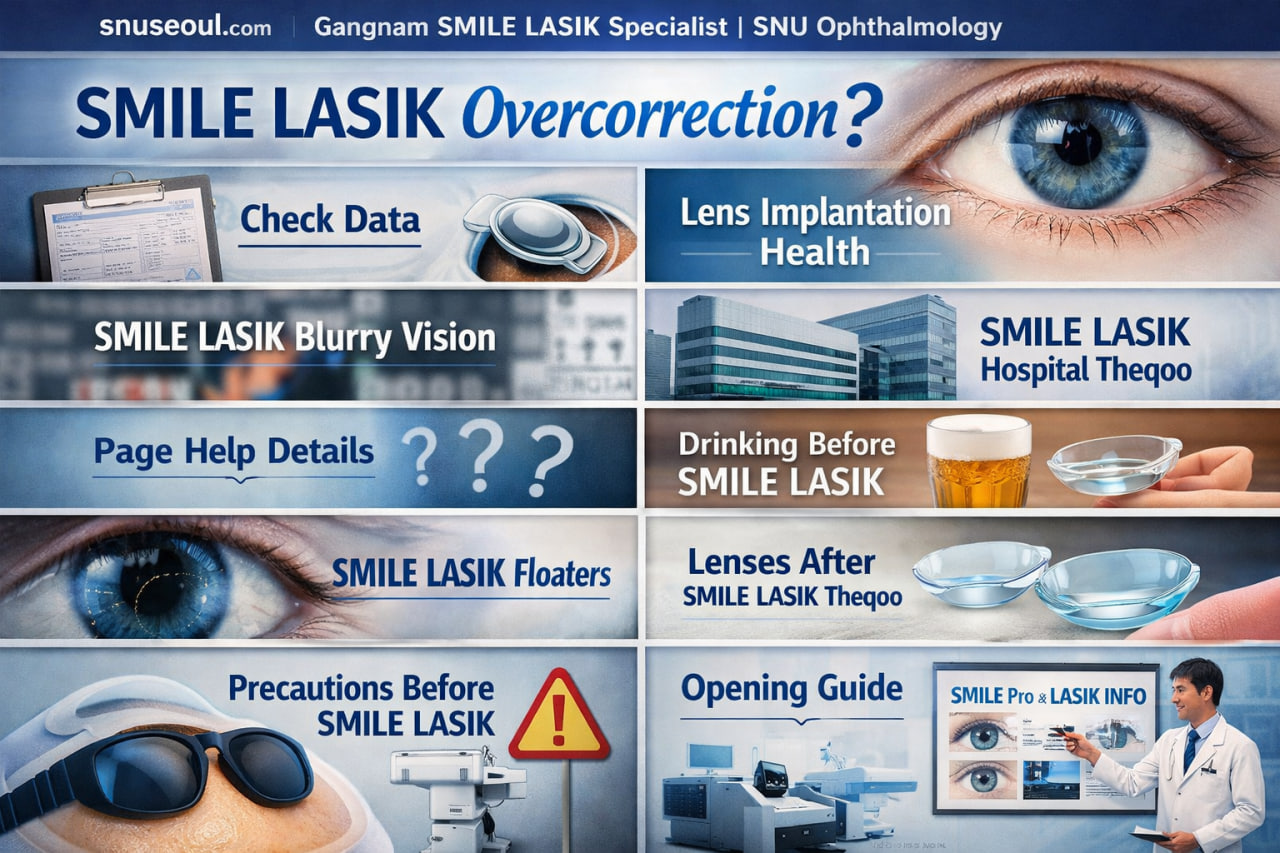
The field of refractive eye surgery has advanced significantly in recent years, offering patients highly precise solutions for correcting myopia and astigmatism. One of the most widely discussed innovations is SMILE LASIK, a procedure designed to reshape the cornea using a small incision rather than the larger corneal flap used in traditional LASIK. As awareness of this technique grows, many individuals researching vision correction options seek detailed information about preparation, safety, and recovery.
Medical centers in Gangnam have become globally recognized for performing advanced ophthalmic procedures, and SNU Ophthalmology is frequently mentioned among institutions providing specialized care. Prospective patients often visit informational platforms such as snuseoul to learn more about procedures like SMILE Pro, recovery expectations, and alternatives such as implantable lens surgery.
Among the most frequently asked questions during consultations are those related to alcohol consumption before surgery and the necessary precautions patients must follow before undergoing SMILE LASIK. Understanding these guidelines is essential for achieving safe and successful surgical outcomes.
How SMILE LASIK Works And Why It Is Popular
SMILE LASIK, or Small Incision Lenticule Extraction, is a laser-based procedure designed to correct refractive errors by reshaping the cornea. Using a femtosecond laser, the surgeon creates a thin lenticule inside the corneal tissue. This lenticule is then removed through a small incision, which changes the curvature of the cornea and improves vision.
Because the incision is minimal, the corneal structure remains more stable and nerve disruption is reduced. Many patients therefore experience fewer dry eye symptoms compared with traditional LASIK surgery.
Clinics specializing in SMILE technology, including SNU안과 and organizations associated with 에스앤유안과, often provide the latest platforms such as SMILE Pro to improve accuracy and shorten surgical time. These technological improvements have contributed to the procedure’s growing popularity among patients seeking rapid recovery and reliable visual outcomes.
Why Alcohol Should Be Avoided Before SMILE LASIK
One of the most common questions patients ask during consultations concerns alcohol consumption before surgery. The phrase 스마일라식 전 음주 appears frequently in online searches because many individuals want to know whether drinking the night before surgery could affect the procedure.
Alcohol consumption can interfere with surgical preparation in several ways. First, alcohol causes dehydration, which affects tear production and corneal surface stability. Accurate corneal measurements are critical for planning the laser treatment, and dehydration may influence these measurements.
Second, alcohol can increase inflammation in the body. Even moderate drinking may alter blood circulation and delay the natural healing response after surgery.
Finally, alcohol can disrupt sleep quality. Proper rest the night before surgery is essential because patients must remain relaxed and cooperative during the procedure. For these reasons, most surgeons advise avoiding alcohol for at least one or two days before undergoing SMILE LASIK.
Educational materials explaining these recommendations are often available in digital patient resources labeled doc page, next help full, or guide extra go.
Essential Precautions Before Undergoing SMILE LASIK
Preparation for SMILE LASIK involves several important steps designed to ensure surgical accuracy and minimize complications. Patients are typically advised to stop wearing contact lenses several days before their evaluation and surgery date. Contact lenses can temporarily alter the natural shape of the cornea, which may interfere with precise measurements.
Another important aspect of preparation involves reviewing 스마일라식 전 주의사항 carefully. These guidelines usually include avoiding eye makeup on the day of surgery, maintaining proper eye hygiene, and arranging transportation home after the procedure.
Some patients considering other procedures, such as 렌즈삽입술 헬스 or implantable lens surgery, may notice that similar preparation rules apply. Regardless of the technique used, maintaining a healthy ocular environment is essential for safe surgery.
Detailed explanations of these guidelines are often provided in patient instruction pages labeled 페이지 도움말 상세 or 내용 보기 전체보기 so individuals can fully understand their responsibilities before surgery.
Possible Symptoms During Early Recovery
After SMILE LASIK, patients typically notice improvement in their vision within the first day. However, the healing process continues over several weeks as the cornea stabilizes.
One symptom sometimes experienced during early recovery is temporary haze or cloudiness in vision. In Korean discussions this is known as 스마일라식 뿌연 증상. This effect occurs because the cornea needs time to adjust after the reshaping process. In most cases, vision becomes progressively clearer over the following days.
Some individuals also report noticing floaters, often referred to as 스마일라식 비문증. These small shadows moving across the visual field are usually unrelated to the surgery itself but may become more noticeable as patients pay closer attention to their vision.
Online forums discussing experiences, including threads like 스마일라식 병원 더쿠, often highlight these symptoms, but professional medical advice is essential when evaluating any postoperative concern.
Lifestyle Considerations After Surgery
Although recovery from SMILE LASIK is relatively quick, patients should still follow several precautions during the early healing period. Strenuous physical activities should be avoided temporarily to prevent accidental eye injury.
For example, discussions about sports restrictions appear in online searches such as 스마일라식 복싱 디시, where individuals ask when they can safely return to boxing or other high-impact sports. Doctors generally recommend waiting several weeks before participating in activities that may involve physical contact.
Smoking and vaping habits are another area of concern. Online discussions related to 스마일라식 후 전자담배 디시 suggest that some patients are unsure whether vaping affects healing. Ophthalmologists typically recommend avoiding both smoking and vaping during early recovery because they may irritate the eyes and slow healing.
Patients occasionally explore discussions like 스마일라식 후 렌즈 더쿠 regarding contact lens use after surgery. Although SMILE LASIK is designed to eliminate the need for corrective lenses, certain rare cases may require temporary lenses for minor adjustments.
Eligibility Requirements And Age Limitations
Before recommending SMILE LASIK, doctors carefully evaluate whether a patient is an appropriate candidate. This evaluation includes measuring corneal thickness, analyzing refractive stability, and reviewing medical history.
The topic of 스마일라식 나이제한 is commonly discussed among potential patients. Most ophthalmologists recommend performing refractive surgery only after vision has stabilized, which typically occurs in the early twenties.
During consultations, doctors also review patient expectations and lifestyle factors. Comprehensive 자료 자료 확인 and diagnostic testing help determine whether SMILE LASIK or another treatment option is most suitable.
Addressing Concerns About Surgical Accuracy
Patients researching refractive surgery sometimes worry about complications such as overcorrection, referred to as 스마일라식 과교정. Modern laser technology and advanced diagnostic tools have greatly reduced this risk, but surgeons still conduct extensive testing before surgery.
Corneal mapping, wavefront analysis, and tear film evaluation allow surgeons to customize treatment for each individual patient. These technologies ensure that the laser reshaping process matches the unique characteristics of each eye.
Online discussions about potential side effects, including threads referencing 스마일프로 부작용 디시, can sometimes create unnecessary anxiety. While no surgical procedure is completely risk free, SMILE LASIK has demonstrated excellent safety and effectiveness when performed by experienced specialists.